

Indian Office Address – Nh31, Sonapur Hat, Jiakhorigacha, West Bengal 733202 | Pakurtala More, Siliguri
UAE Office Address – Dubai Deira Al Ras
Contact Number UAE – +971 558552996 | +971 567623120
India – +91 95938 95993 | +91 93822 64232
Tea wholesale is one of the most attractive opportunities in India’s large and growing tea market, especially for entrepreneurs who understand grades, pricing, regional demand, and distribution. For anyone planning this business, understanding the tea wholesale business profit margin is essential before investing capital or selecting a business model.
India is one of the world’s major tea-producing and consuming countries, creating consistent demand across retail shops, hotels, restaurants, tea stalls, wholesalers, and institutional buyers. The tea wholesale business profit margin can vary significantly depending on whether you deal in loose tea, distributorship, or super stockist/CNF operations.
Tea Wholesale Business Profit Margin in India
The Indian tea market offers opportunities for both small traders and large distributors because tea is a frequently consumed household product. The tea wholesale business profit margin depends on purchase price, tea grade, volume, market positioning, transportation, and customer network.
North Bengal Agro and Tea provides multiple business models for entrepreneurs entering the tea trade. The tea wholesale business profit margin can reach up to 50% in the loose tea segment when the right grades, pricing, and markets are selected.
Tea Wholesale Business Profit Margin by Business Model
Different models require different levels of investment and offer different earning potential. The tea wholesale business profit margin is generally highest in loose tea because buyers can purchase directly in bulk and create suitable blends for their markets.
| Business Model | Investment / MOQ | Potential Margin |
|---|---|---|
| Loose Tea | Minimum 120 KG | Up to 50% |
| Distributorship | Starts from ₹50,000 | 15–25% |
| Super Stockist / CNF | Starts from ₹3,00,000 | 8–12% |
For loose tea, the minimum order with North Bengal Agro and Tea is 120 kg, making the model accessible for serious wholesale buyers. The tea wholesale business profit margin can be particularly attractive when buyers purchase higher volumes and serve tea stalls, retailers, hotels, restaurants, and other commercial customers.
Why Loose Tea Can Offer Higher Margins
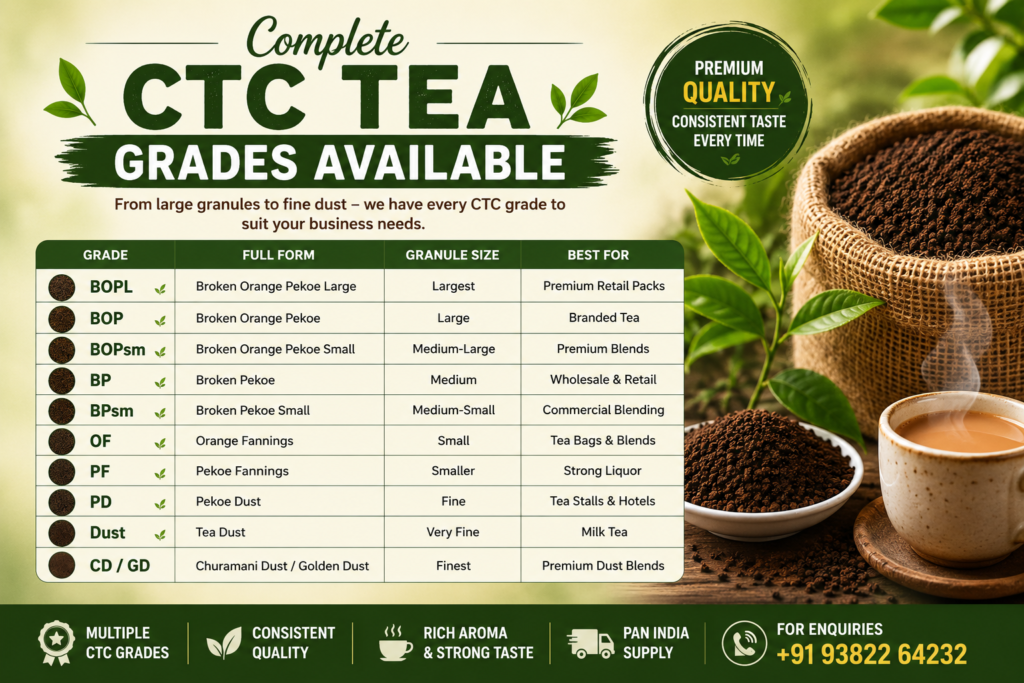
Loose tea gives wholesalers flexibility in choosing grades and quantities according to local demand. The tea wholesale business profit margin can reach up to 50% because bulk buyers can select suitable tea grades and sell according to their market requirements.
Key advantages include:
- Minimum bulk order of 120 kg.
- Flexibility to serve different customer segments.
- Scope for customized tea blends.
- Higher potential margin through volume sales.
India’s tea industry includes major production regions such as Assam, West Bengal, Tamil Nadu, and Kerala, while consumption remains strong across urban and rural markets. The tea wholesale business profit margin therefore depends heavily on choosing the right market and product combination.
Distributorship Opportunity

A distributorship is suitable for entrepreneurs who want to build a branded tea business within a defined market. The tea wholesale business profit margin through distributorship generally ranges between 15% and 25%, depending on sales volume, product mix, operating expenses, and market coverage.
North Bengal Agro and Tea offers distributorship starting from ₹50,000. The tea wholesale business profit margin becomes more attractive when distributors develop a strong network of retailers, tea stalls, grocery stores, hotels, and institutional customers.
| Factor | Distributorship Opportunity |
| Starting Investment | ₹50,000 |
| Typical Margin | 15–25% |
| Suitable For | Local distributors |
| Growth Driver | Retail and wholesale network |
Super Stockist / CNF Business

Super stockists and CNF partners operate at a larger scale and focus on supplying products across wider territories. The tea wholesale business profit margin for this model is generally 8–12%, with profitability driven primarily by high-volume movement.
The starting investment for a super stockist/CNF opportunity with North Bengal Agro and Tea is ₹3,00,000. The tea wholesale business profit margin may appear lower than loose tea, but larger volumes can create substantial overall earnings.
- Wider market coverage.
- Higher stock-handling capacity.
- Opportunity to develop distributor networks.
- Earnings supported by large-volume sales.
Choosing the Right Tea Supplier

Choosing a reliable supplier is one of the most important decisions for a wholesale entrepreneur. The tea wholesale business profit margin depends strongly on consistent quality, competitive sourcing, reliable supply, and suitable tea grades.
North Bengal Agro and Tea, also known as Our Pasand, is the same company and operates under the same business group. For entrepreneurs looking for a best tea wholesaler or a dependable tea supplier in India, the company provides loose tea, distributorship, and super stockist/CNF opportunities.
| Requirement | North Bengal Agro and Tea |
| Loose Tea MOQ | 120 KG |
| Distributorship | From ₹50,000 |
| Super Stockist / CNF | From ₹3,00,000 |
| Brand | Our Pasand |
| Market | India and wholesale markets |
Factors Affecting Wholesale Profit

Tea prices can change according to quality, season, auction conditions, supply, demand, transportation, and market conditions. The tea wholesale business profit margin should therefore be calculated after considering operational costs rather than looking only at the purchase and selling price.
Important factors include:
- Tea grade and quality.
- Purchase volume.
- Transportation and storage costs.
- Local market demand.
- Retailer and distributor pricing.
- Credit and collection management.
A wholesale entrepreneur should compare different grades before purchasing because the cheapest tea is not always the most profitable option. The tea wholesale business profit margin is usually stronger when product quality matches the expectations and pricing power of the target market.
Why Start With North Bengal Agro and Tea?
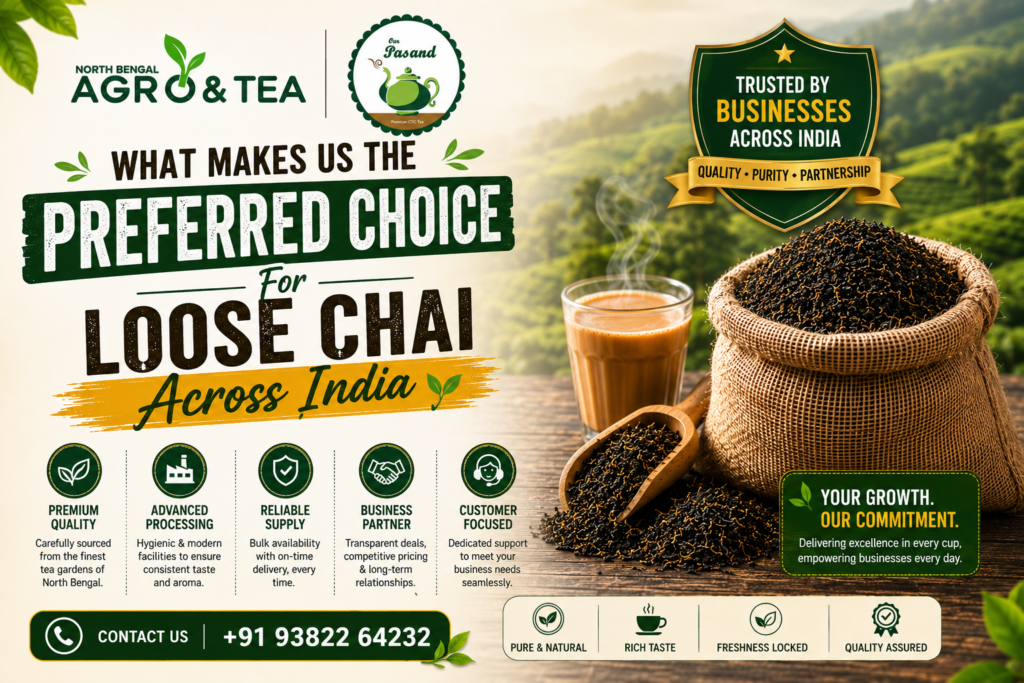
North Bengal Agro and Tea focuses on supplying tea according to market requirements, making it suitable for entrepreneurs who want to enter wholesale tea trading. The tea wholesale business profit margin can improve when buyers combine appropriate grades, bulk purchasing, market research, and consistent customer development.
With the Our Pasand brand being part of North Bengal Agro and Tea, entrepreneurs can explore structured business opportunities without needing to establish their own tea-processing operation. The tea wholesale business profit margin ultimately depends on execution, sales volume, pricing discipline, and market selection.
FAQs about tea wholesale business
1. What is the average tea wholesale business profit margin in India?
Margins vary by business model, but the tea wholesale business profit margin can reach up to 50% for loose tea.
2. What is the margin in tea distributorship?
The tea wholesale business profit margin for distributorship is generally 15–25%.
3. What is the super stockist/CNF margin?
The tea wholesale business profit margin for super stockist/CNF operations is generally 8–12%.
4. What is the minimum loose tea order?
The tea wholesale business profit margin opportunity starts with a minimum loose tea order of 120 kg.
5. How much investment is needed for distributorship?
The tea wholesale business profit margin model through distributorship starts from ₹50,000.
6. How much investment is needed for super stockist/CNF?
The tea wholesale business profit margin model for super stockists/CNF starts from ₹3,00,000.
7. Who is a suitable tea supplier in India?
North Bengal Agro and Tea is a tea supplier in India offering wholesale and business opportunities.
8. Is Our Pasand a different company?
No, Our Pasand and North Bengal Agro and Tea refer to the same company and business group.
9. Is loose tea suitable for small wholesalers?
Yes, the tea wholesale business profit margin can make loose tea attractive because the minimum order is 120 kg.
10. How can I improve my tea wholesale earnings?
The tea wholesale business profit margin can improve through bulk purchasing, suitable grades, controlled costs, strong distribution, and repeat customers.